Intermediate Python for Scripting Function Concepts
Learning objective: By the end of this lesson, students will be able to explain how functions can simplify complex tasks and promote code reuse.
What is a function?
A function is a reusable block of code written to perform a single purpose. With a function, you can store code that can be used conveniently as many times as you wish without having to rewrite the code each time. As a result, functions are one of the fundamental building blocks of Python, and you’ll find and use them everywhere.
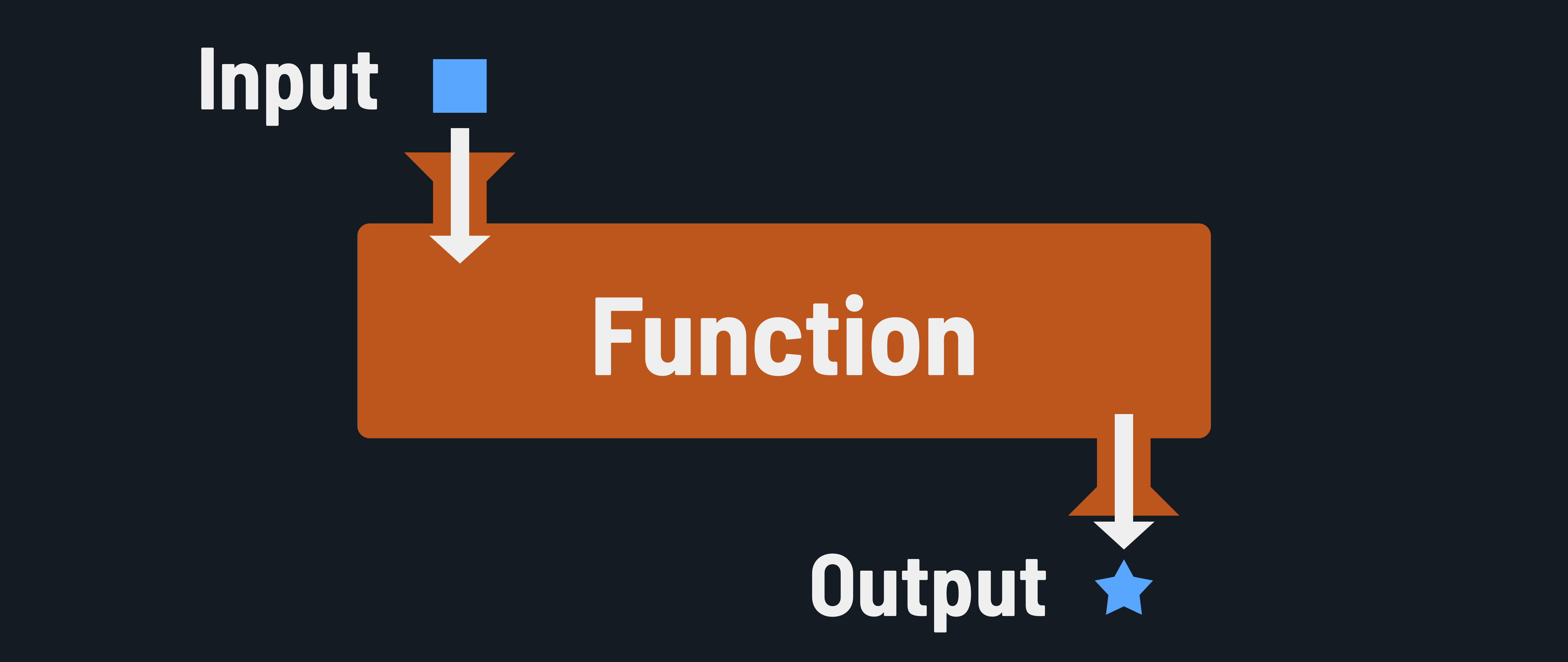
Functions optionally take in data as input and return a single piece of data (including complex data such as objects or other functions).
📚 A function is a block of code that can be called as needed and is designed to perform a specific task. A function may accept input and can return a result after completing its task.
Why are functions essential in programming?
Tackle complexity
We typically tackle a complex task by breaking it into smaller tasks or steps - when we’re programming, we want to do the same! Functions allow us to break up programs into more manageable blocks of code.
Code reuse
Functions provide code reuse because they can be called repeatedly. For example, an addComment function might be called every time a user adds a comment to a social media post.
Documentation & debugging
Naming functions appropriately, for example a name like addComment helps document what that function’s job is (to add a user’s comment to the list of comments). Organizing code into functions also makes it easier to find and fix code that’s not working as expected, a process known as debugging.