Intro to Asynchronous Programming Promises
Learning objective: By the end of this lesson, students will have a basic understanding of JavaScript promises and their application in managing asynchronous operations.
Understanding JavaScript promises
Promises in JavaScript are a crucial mechanism that allow us to write asynchronous code. A Promise represents the current state of an asynchronous operation.
Promise states
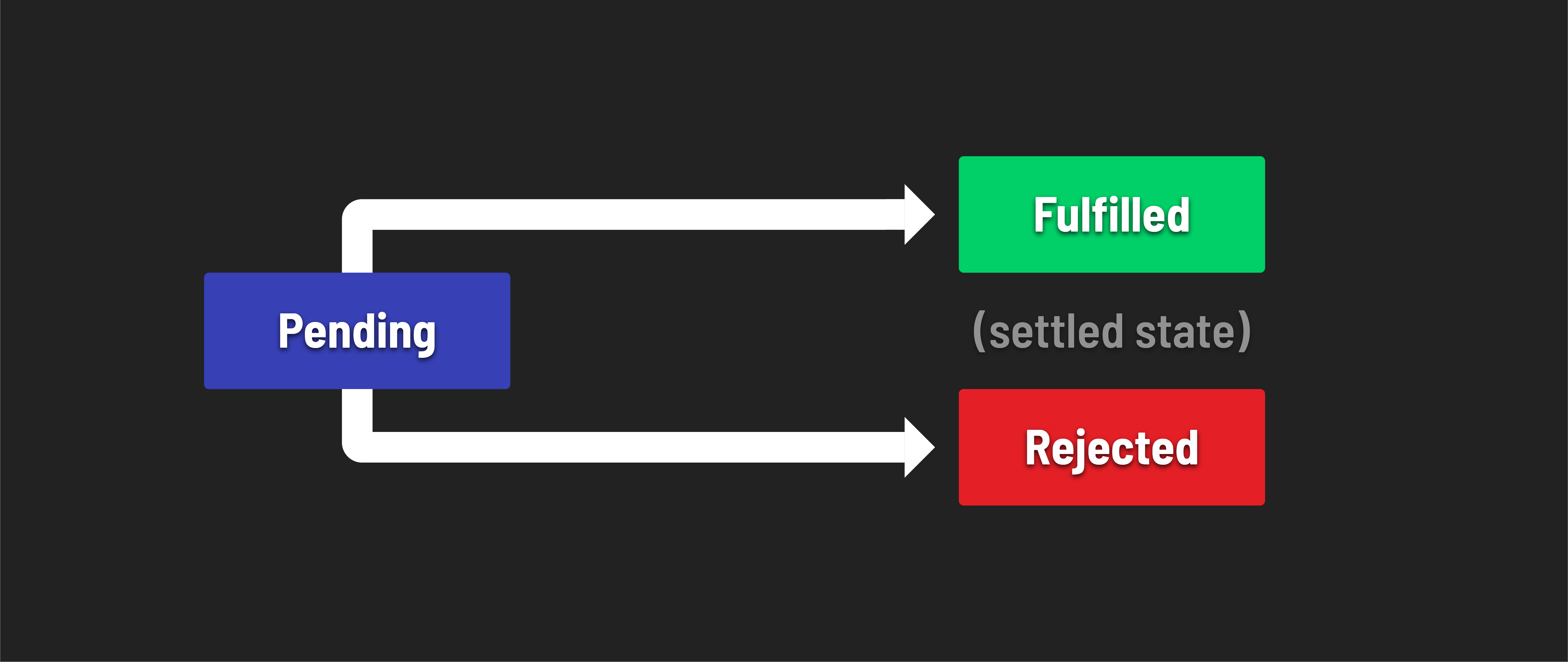
A promise can exist in one of three states:
- Pending: The initial state of a promise when it’s created. The asynchronous operation has not been completed yet, and the results are pending.
- Fulfilled: The asynchronous operation was successful.
- Rejected: The asynchronous operation failed or encountered an error.
Once a promise is either fulfilled or rejected, it is considered settled, and its state can no longer change.
Handling Promises
In modern JavaScript, many built-in methods return promises, making it easier to work with asynchronous operations.
An example is Node’s fs/promises module, which contains the readFile() method we utilized throughout this lecture.
Promises in JavaScript can be consumed in various ways including:
- Using
.then()and.catch()for chaining asynchronous operations. async/awaitfor more modern, readable, and synchronous-style code.Promise.all()for executing multiple promises concurrently and handling their results together.
📚 Consuming a promise in JavaScript refers to the process of handling the eventual result (either fulfillment or rejection) of a promise.
Creating a Promise from scratch
Promises are created using the Promise constructor, which takes a function as its argument. This function generally performs an asynchronous operation and calls either resolve (on successful completion) or reject (on failure).
const myPromise = new Promise((resolve, reject) => {
  // Asynchronous operation
  if (/* operation successful */) {
    resolve('Success!');
  } else {
    reject('Failure.');
  }
});