Intro to SPAs Comparing SPAs and MPAs
Learning objective: By the end of this lesson, students will be able to discuss some of the differences between SPAs and MPAs.
Advantages of SPAs over MPAs
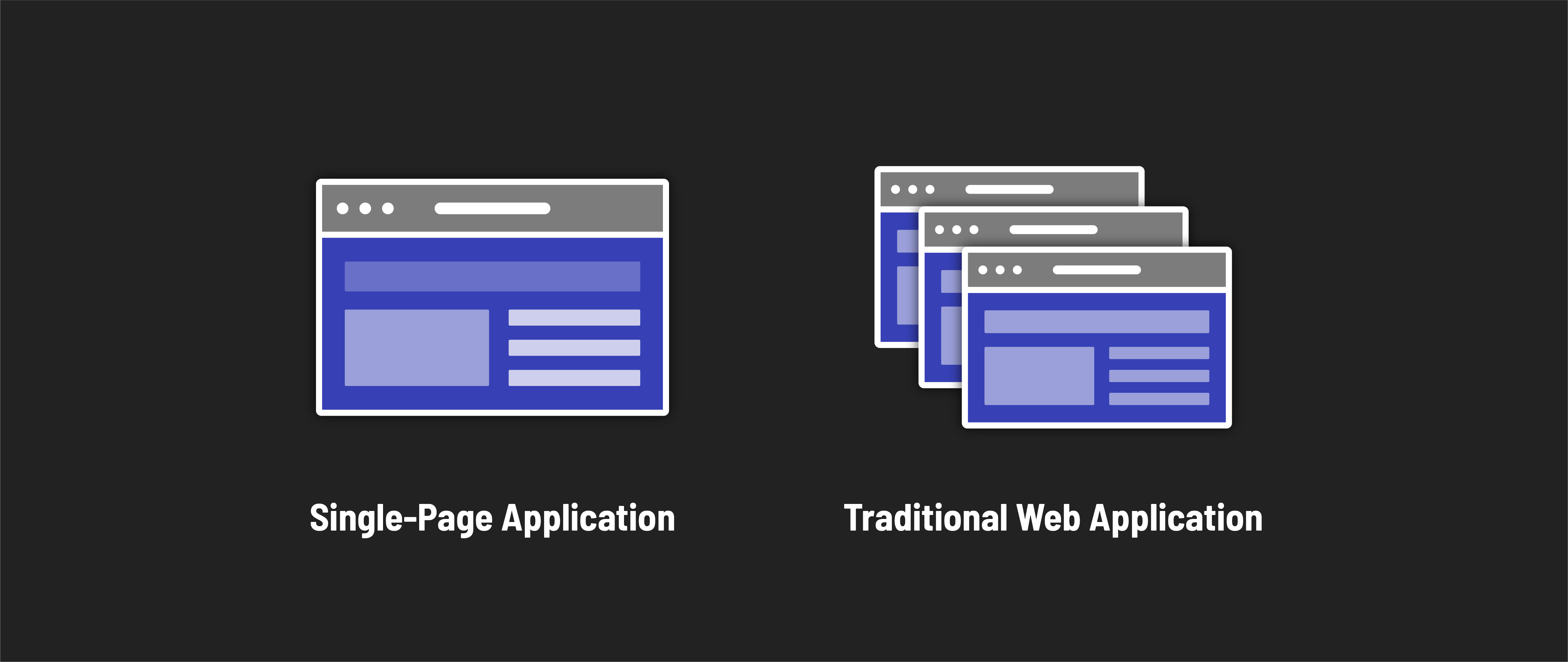
SPAs have a few headline advantages over MPAs, which we’ve already discussed. These include improved user experience and strong support from libraries and frameworks like Angular, React, and Vue.js, which are all popular options that assist in constructing SPAs.
There are advantages beyond this though:
- More efficient server interactions: In a SPA, we are only concerned with sending and updating the needed data. When the client receives data from the server, it is stored in memory. This allows us to pass the data around the application without requesting it again, reducing the number of interactions between the client and the server.
- Streamlined front-end development: SPAs can be easier to develop and maintain, as they often use modern front-end frameworks and libraries. This can help developers write cleaner, more organized code and use modern development tools and practices. Some of these frameworks and libraries include React, Angular, and Vue.js.
- Easier debugging: SPAs can be easier to debug, as developers can use modern debugging tools and practices to identify and fix issues. This can reduce the time and effort required to fix bugs and problems in the application.
Challenges of building SPAs
While there are many advantages that come with SPAs, some features are more difficult to implement, and some concerns come into play:
- Search Engine Optimization (SEO) Concerns: Search engines traditionally rely on HTML content to crawl and index web pages. SPAs dynamically load content using JavaScript, making it challenging for search engines to index the content effectively.
- Initial Load Time: SPAs often require a larger initial load time as all the necessary assets (HTML, CSS, JavaScript) are loaded at the beginning. This can lead to slower initial page rendering compared to traditional multi-page applications.
- Complex State Management: As a SPA grows, managing the application’s state becomes more complex. With multiple components and views, ensuring that the application behaves as expected and maintaining a consistent state across the application becomes more difficult.
- Accessibility: Some of a SPA’s core features (dynamically updating content using JavaScript, URLs not updated server-side, etc.) pose challenges when implementing accessibility features.
Workarounds for many of these problems exist, and for many applications, the advantages of SPAs will outweigh the downsides. That said, a nuanced approach should be taken when deciding if an application should be built as a SPA or an MPA.